
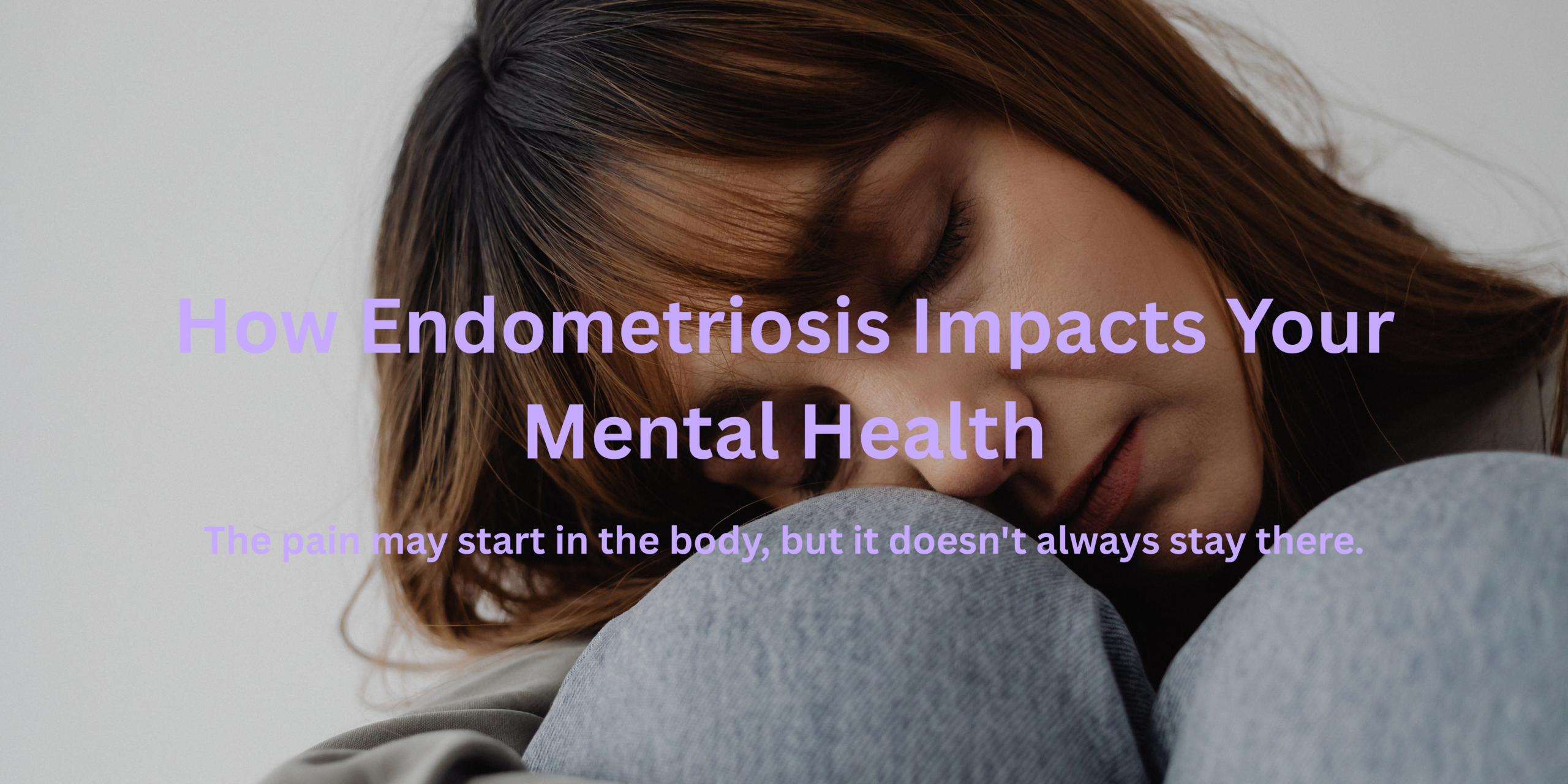
Living with endometriosis can often feel like fighting a war on two fronts. On one side, there is the relentless physical pain. On the other, there is a quiet, exhausting battle with your mental health. For a long time, the medical community focused primarily on physical lesions. Today we know that the psychological toll of endometriosis is just as real, and understanding this connection is the first step toward healing.
This article will walk you through:
- How endometriosis can affect your mental health and emotional well-being
- The connection between chronic pain, anxiety, and depression
- How delayed diagnosis and feeling dismissed can impact your mental health
- The effects of endometriosis on intimacy, relationships, and body image
- Why treating your mental health is an important part of endometriosis care
- Research-backed strategies that can help you manage stress, pain, and emotional well-being
- How a multidisciplinary healthcare team can support both your physical and mental health
The Pain-Mind Connection
It is not “all in your head,” but your physical pain and your mental state are deeply connected. Research shows that up to 50% of women with endometriosis experience depressive symptoms, and 30% to 40% experience significant anxiety. This is heavily driven by chronic pelvic pain. In fact, one study found that in the presence of chronic pelvic pain, depression was reported in up to 86% of patients, compared to just 28% for those without pain. Persistent pain alters how our brains process stress and emotions, trapping many women in a vicious cycle where pain fuels negative emotions, and unregulated emotions amplify pain.
The Emotional Weight of the “Long Wait”
One of the most frustrating aspects of endometriosis is how long it takes to find answers. On average, women wait 7 to 10 years for a proper diagnosis. During these years, many are told their debilitating pain is “just normal” menstrual discomfort or face dismissive healthcare providers. This gaslighting leads to intense emotional distress, self-doubt, and profound isolation. Even after diagnosis, realizing you have a chronic illness with no definitive cure can trigger a fresh wave of psychological stress and anxiety.
Intimacy, Relationships, and Body Image
Body Image
When you are constantly dealing with chronic pain, bloating (often called ‘endo-belly’), and a body that feels unpredictable, your relationship with your body can take a serious hit. In fact, more than 77% of women with endometriosis report struggling with body image. Because of this distress, along with pain that can make eating uncomfortable, many women find themselves struggling with disordered eating behaviors.
Scientific studies have even pointed to a shared genetic link between endometriosis and eating disorders. If you find yourself in a complicated relationship with food or your reflection, remember that your body is fighting a battle, and learning to treat it with gentle self-compassion is a crucial part of the healing process.
Intimacy Insecurities
But the impact of endometriosis does not stop at how you see your body. Up to 79% of women with the condition also suffer from painful intercourse (dyspareunia). This often leads to heavy feelings of guilt, fear of pain before sex, and worries of being a burden to a partner. This physical barrier quickly translates into a heavy emotional toll. Indeed, research shows that an overwhelming 83% of women with endometriosis experience sexual distress, which is deeply intertwined with body image disturbances (affecting over 77% of patients), lower body appreciation, and a drop in self-compassion.
When intimacy is continuously overshadowed by the expectation of pain, it can trigger profound feelings of worthlessness, hopelessness, and a distressing loss of control over your own body. This struggle chips away at your self-esteem and can make you feel deeply disconnected from your own sense of femininity.
Reclaiming Your Peace: A Holistic Way Forward
Because endometriosis affects both your body and mind, your treatment should too. While medical and surgical options help manage physical symptoms, psychological care is crucial.
Here are a few research-backed strategies that help:
- Emotion Regulation & CBT: Cognitive Behavioural Therapy (CBT) helps women gain skills to manage anxiety and cope with persistent pain.
- Mindfulness & Exercise: Practices like mindfulness meditation, yoga, and Pilates are proven to lower systemic inflammation, reduce pain, and improve mental health.
- Building a Multidisciplinary Team: You deserve a healthcare team that works together, including gynecologists, mental health professionals, pain specialists, and nutritionists.
Remember, your pain is real, your mental health matters, and you do not have to carry this invisible burden alone.
Wrap Up
Living with endometriosis can be a deeply challenging experience, but it is a journey you do not have to walk alone. Because this condition impacts both your physical body and your emotional well-being, true healing comes from a holistic, integrated approach that treats both sides of the coin. Finding a compassionate, multidisciplinary healthcare team, including gynecologists, pain specialists, and mental health professionals, is a vital first step to building a care plan that addresses your unique needs.
Sources
Dipankar, S. P., Kushram, B., Unnikrishnan, P., Gowda, J. R., Shrivastava, R., Daitkar, A. R., & Jaiswal, V. (2025). Psychological Distress and Quality of Life in Women With Endometriosis: A Narrative Review of Therapeutic Approaches and Challenges. Cureus, 17(3), e80180. https://doi.org/10.7759/cureus.80180
Li, W., Feng, H., & Ye, Q. (2025). Relationship between endometriosis and mental health. A systematic review and meta-analysis. Archives of medical science : AMS, 21(5), 1985–1996. https://doi.org/10.5114/aoms/208502
Márki, G., Bokor, A., Rigó, J., & Rigó, A. (2017). Physical pain and emotion regulation as the main predictive factors of health-related quality of life in women living with endometriosis. Human reproduction (Oxford, England), 32(7), 1432–1438. https://doi.org/10.1093/humrep/dex091
Szypłowska, M., Tarkowski, R., & Kułak, K. (2023). The impact of endometriosis on depressive and anxiety symptoms and quality of life: a systematic review. Frontiers in public health, 11, 1230303. https://doi.org/10.3389/fpubh.2023.1230303
Zippl, A. L., Reiser, E., & Seeber, B. (2024). Endometriosis and mental health disorders: identification and treatment as part of a multimodal approach. Fertility and sterility, 121(3), 370–378. https://doi.org/10.1016/j.fertnstert.2023.12.033